Free Consultations 815-215-7561 312-782-2453

815-215-7561 312-782-2453
Emergency Room Triage Errors That Lead to Lawsuits
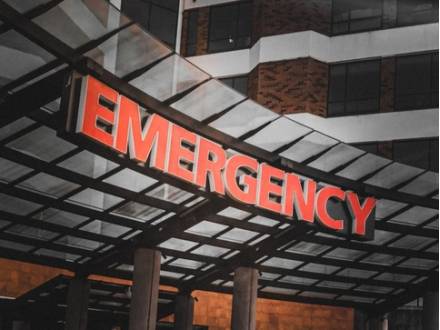 Emergency room staff must make careful assessments about which patients should receive treatment first. This is by no means an easy task, as the hospital may be overwhelmed with the sheer number of people in need of care. When a patient suffers due to the negligence of emergency room staff, however, the injured party could have a case for a lawsuit.
At Mannarino & Brasfield, A Division of Schwartz Jambois, our Rockford, IL medical malpractice attorneys can help you file a lawsuit if an emergency room made a preventable error during triage that resulted in damages. We do not collect any fees unless we help you get paid, so do not hesitate to reach out to our firm.
What Does "Triage" Mean?
Triage is the process emergency rooms use to decide which patients need care first. When you arrive at the ER, a triage nurse checks your symptoms and vital signs. The nurse then ranks how urgent your condition is. Many hospitals use a five-level scale called the Emergency Severity Index. Level 1 means a patient needs care right away to survive. Level 5 means the problem can safely wait.
The goal of triage is simple. Patients with the most dangerous conditions should be seen first. A person having a heart attack should not wait behind someone with a sprained ankle. When triage goes wrong, a seriously ill patient may sit in the waiting room for hours. Common triage errors include ranking a patient too low or missing signs of a stroke. Some nurses also fail to recheck patients whose condition gets worse while they wait. Delays like these can allow a treatable illness to cause permanent harm or even death.
When Is a Hospital Liable for Emergency Room Errors in Illinois?
A hospital can be liable for emergency room errors in Illinois when its staff fails to meet the standard of care and a patient is harmed as a result. The standard of care means what a reasonably careful provider would do in the same situation. You must also show that the mistake caused your injury. Proving that a mistake happened is not enough on its own.
Hospitals are generally responsible for the actions of their employees. Triage nurses are usually hospital employees. If a nurse ignores warning signs or ranks a patient far too low, the hospital may be liable for that error.
ER doctors are a little different. Many work for outside staffing groups rather than the hospital itself. Even so, Illinois courts have held that a hospital can be liable for a contractor's mistakes in some cases. This can happen when the hospital presents the doctor as its own and the patient had no reason to know otherwise. Most people in an ER do not get to choose their doctor, so this rule can come into play in many emergency cases.
A hospital can also be liable for its own failures. Poor staffing and weak triage policies are two common examples. Federal law requires hospitals to screen and stabilize emergency patients, whether or not they can pay.
What Evidence Do You Need to Support an Emergency Room Triage Claim in 2026?
The evidence needed to support an emergency room triage claim largely consists of the hospital's own records. Most hospitals now use electronic health records. These systems track who entered information and when. That digital trail can show exactly how long you waited and what staff knew during that time. Helpful evidence includes:
- Triage notes: These show the urgency level the nurse assigned and the symptoms you reported.
- Time stamps: Records of when you arrived, when you were triaged, and when a doctor first saw you can reveal dangerous delays.
- Vital signs: Blood pressure, heart rate, and oxygen readings can show whether your condition was worse than staff believed.
- Test results and imaging: Lab work and scans can point to problems the ER should have caught sooner.
Additionally, your own written account of your symptoms and what you told staff can fill gaps in the official record. You have the right to request copies of your medical records from the hospital. A medical professional will need to study the records and explain how the care fell short. In Illinois, that review must happen before a lawsuit can even be filed.
What Is an Affidavit of Merit, and Why Does It Matter for Emergency Room Malpractice Claims?
An affidavit of merit is a sworn statement that must be filed with a medical malpractice lawsuit in Illinois. Under Illinois law, the attorney for the injured patient must declare that a qualified health professional has reviewed the case (735 ILCS 5/2-622). That professional must practice in the same area of medicine at issue. He or she must also find that there is a reasonable and meritorious cause for filing the suit. A written report from the reviewer must be attached as well.
The rule is meant to stop weak claims early. For a patient, it means the case needs solid medical support from the very first filing. In an ER triage claim, the reviewer is often an emergency physician or an emergency nurse, depending on who made the error. Missing or flawed paperwork can lead a judge to dismiss the case.
The law does allow extra time in some situations, such as when the filing deadline is close and the review is not finished. Illinois generally gives patients two years from when they knew or should have known about the injury to file. In most cases, there is also an outer limit of four years from the date of the error. Getting the medical review started early helps avoid deadline problems.
Contact Our Rockford, IL Emergency Room Negligence Attorneys
A long wait or a missed warning sign in the ER can leave lasting harm, and the hospital's own records may show what went wrong. At Mannarino & Brasfield, A Division of Schwartz Jambois, we work with medical professionals to review your care and build a claim that can stand up to hospital insurers. Contact our Winnebago County, IL medical malpractice lawyers or call 815-215-7561 to schedule a free consultation.
Blog
Contact Us
Our Team is Qualified and Ready to Fight
 The use of the Internet or this form for communication with the firm or any individual member of the firm does not establish an attorney-client relationship. Confidential or time-sensitive information should not be sent through this form.
I have read and understand the Disclaimer and Privacy Policy.

From our offices in Rockford, Orland Park, Glen Ellyn, Joliet, Elmhurst, and Peoria, we represent injury victims throughout Illinois covering, Northern, Central and Southern Illinois. Our team handles cases in Freeport, Belvidere, Elgin, Palatine, Hoffman Estates, Des Plaines, Waukegan, Skokie, Addison, Lombard, Naperville, Lockport, Romeoville, Homer Glen, New Lenox, Mokena, Peoria, Springfield, Quincy, Edwardsville, Granite City, Maryville, Litchfield, Belleville, Winnebago County, Boone County, Stephenson County, Ogle County, Lee County, Lee County, Bureau County, Grundy County, DeKalb County, Cook County, Lake County, McHenry County, DuPage County, Kane County, Will County, Kendall County, Kankakee County, LaSalle County, Sangamon County, Champaign County, Rock Island County, Adams County, McLean County, Tazewell County, Peoria County, Macon County, Vermilion County, McDonough County, Madison County, Jackson County, St. Clair County, and more.
Results listed are not a guarantee or indication of future case results.